Saturday, 10 March 2012

Talking Fish & Hastings Day Boat Turbot

I’m obsessed with accuracy and attention to detail which on many occasions looses me the chance of a sale or the winning of a restaurant’s contract. You may be thinking this is a strange statement but businesses solely look for the cheapest price and will accept what they are told if they get it. By trade I am not a salesman, I’m a fisheries scientist, and being fact driven is how I have evolved. Some might suggest I am now in the wrong position (as a salesman), however I am meeting more and more chefs and restaurateurs whom really want to learn about their seafood. They are putting a much higher value on the service of factually correct and educational information. No longer is a box with fish delivered at a cheap price enough – the business model has evolved and places are opening up for people like myself with an honest passion and knowledge for fish and seafood. Us as consumers rely upon the menu writer, the front of house/waiting staff or the chef to serve us high quality food coupled with information about the meal itself and its noticeable fish and seafood finds itself at the very top of the agenda.

Recently I have been lucky enough to see some particularly special fish caught by small English South Coast day boats. I do hear this phrase ‘Day Boat’ used nearly as often as ‘Sustainable’ and like the latter it can be used in the wrong context. I guess it is easy to write either of these two statements if it is the information that has been passed on. In reality Day boat fish are commonly stunning in quality and sometimes have a price to match. This week our depot has been receiving fabulous fish out of Hastings with Brill, Plaice and MSC Dovers to name a few. However, the most remarkable fish on show were the Turbot. The nature of a Turbot, being a benthic inhabitant, means it is commonly captured by more aggressive bottom beam trawl methods; additionally they can be captured by mid water pelagic otters trawls. Neither methods are associated with day boats so when such a beast as the 8.2kg fish pictured below arrived the quality, compared to many beamer caught turbot, was so remarkable I had to share it with you all.


Tuesday, 24 January 2012

It's Not Just Cod, Its Skrei Cod

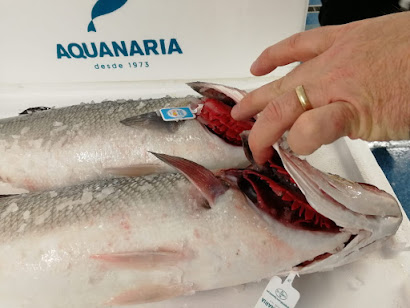
I’ve seen some good looking fish in my time but today I saw something very special. Now you may roll your eyes if tell you it was cod “what’s special about that? everyone has seen a cod?”. And how true that is, everyone has seen a cod, especially me, however this is any old cod, this is a Norwegian delicacy cod, this is ‘Skrei’.

What first catches the eye about a Skrei cod is its colour. A very very dark top skin, glistening in the artificial light as the ice melts and runs down the flank. 


Then the striking deep green of the body becomes apparent – just hypnotic. A prod and a poke and suspicions are confirmed; the flesh is as firm as when it left the sea on the end of a Norwegian fisherman’s line. 


As the blocksman removes the fillets for a yield test of the first batch the beautiful large white flaked flesh was exposed. This was turning into fish porn!


So what is Skrei cod?

Well as you may have already gathered it’s a Norwegian line caught cod which is targeted only by small day boat fisheries. Due to the immense volume and the short term migration Skrei is there only for taking between January and March. For me the importance of this product is that it is one of the few Marine Stewardship Council’s (MSC) accredited species that arrive at market in exceptional condition and competitively priced. Condition is so important to the fisherman that only fish without skin blemishes can be packed and sent as Skrei (Unfortunately since the supermarkets have jumped on the ‘Brand mark’ bandwagon they have forced the price of many of our local sustainably caught species which then usually arrive to the counters in less than perfect condition). Additionally Skrei is supported by the World Wildlife Fund and remember when buying true Skrei will have the tag attached to the forward dorsal fin or the fillet should come with this reference.


There are a few articles on the internet explaining the Skrei phenomenon in more detail with this being probably the best

Skrei, the Norwegian miracle

Additionally if you can lay your hands on a copy of January’s edition of ‘Restaurant’ magazine there is a superb article on page 42.


I couldn't help but put a picture of my hair net on :-)

Monday, 18 April 2011

Sydney Fish Market


I'm happy to admit that i am a fully fledged fish geek. Whether i be on holiday, working or just passing through i feel compelled to stop and look at the fish on sale. I do look at quality as i love testing my ability to  pick fresh from old and i love looking at artistic displays, but in reality the fisheries scientist in me is always looking for species i have not seen before as that is what's really exciting. Imagine my excitement when all of a sudden i was in reaching distance of two of the worlds most prestigious fish markets, Tokyo & Sydney. Due to the earthquakes in Japan i have had to put off my trip to Tokyo, but i have finally managed to make the Sydney fish market. 

The Brisbane and Melbourne fish markets were very poor in my opinion, although not as bad as Billingsgate but then again where is? But Sydney certainly has the wow factor. Like all other fish markets the car park is the hustle bustle of traders and public fighting each other for the quickest routes and the best views. The place itself is just a concrete building with 10 or so independent shops around the car park. Romantic it is not, historical looking it is not, a site offering the most wonderful sea food - it is.


The area that sets the Australian seafood market apart from the rest is their offer of cooked crustaceans. Whether it be Western Australian or New South Wales rock lobsters, Moreton bay bugs, mud crabs or the extensive range of prawns, one is just drawn to the colours and patterns of the displays created on the slabs. In Australia the demand for cooked seafood at Christmas is astronomical. However, there is a continued demand throughout the rest of the year which does allow shops and supermarkets to have a good offer day in day out.


The wonderful colours can be seen in the pictures above and below which make for spectacular displays.


Throw a prawn on the bar-b they say. Well I'm not sure how accurate that is as the majority sold are already cooked. There are some wonderful flavored prawns out here especially the Queensland banana prawn and some of the jumbo South Australian Tigers. And what makes them so great in a display is the subtle variance in colours from bright red, through the orange shades onto a dull pink. When set out on a slab it is quite hypnotic.


Very few crustaceans seemed to be sold alive or even raw. I am not sure why this is as the majority of Aussies know exactly how to prepare and cook them. Maybe it is a lazy option? Anyhow the rock lobster is a most beautiful creature and i managed to find a few lives ones at the market.


One thing that is very different in this area of the world is the way oysters are sold. Imagine how Pierre would frown if he saw opened oysters on a tray at his local Brittany fish market. I had never seen this concept before and i guess its a great way to move volume. I can confirm, however, that shucked and eaten  immediately far supersedes previously opened on both taste and texture. I do love the way they are displayed like this.


Until visiting Sydney i hadn't seen any eye catching seafood displays in Australia (the best have been created by me 9if i do say so myself) when involved in store openings and workshops at a well known supermarket). The displays in Queensland seem very regimental in their style and I'm guessing they are attempting to use quality as the selling point. NSW has a very different approach, a more loving and caring approach displays  are set out with pride.


The fish at the market was beautifully fresh. It was difficult to find examples of old fish on display. Of course this is how it should be. They are professionals, they understand how to look after fish to prolong its shelf life and would have a great understanding of potential sales versus ordering patterns. Only when one fully understands this within their own seafood business can they truly offer a display with few blemishes. These guys have nailed it!


On the visit i had a secondary agenda. I was in the process of producing some specialist seafood workshops for a number of supermarket stores and decided they needed to see photos of high quality product. I love the photograph above. When you look closely the two different quality products can be seen intermingled to disguise the older ones. A common trick :-)


Some examples of sashimi cuts of salmon, tuna and octopus.

Sydney fish market is a wonderful place and a mecca for any fish loving foodie. A must visit.
http://www.sydneyfishmarket.com.au/

Thursday, 20 January 2011

The Fish Fight has Only Just Begun

So its taken a couple of celebrity chefs and an evening slot on C4 to achieve something Charles Clover’s End of the Line failed to do – ‘Gain support’ I am unsure as to whether Hugh’s fish fight campaign will change the ways of those select unscrupulous fisherman that continue to discard everything they catch until their bow is full of prime sized species; I am unsure as to whether the EU will take on board the significance and act on half a million signatures over the best available scientific advice that they already use; I am unsure that the biggest and most destructive of fish catching nations will be deterred from targeting endangered species on a call from a man that lives in a River Cottage. However, what I am sure of is that the tide is turning. Supermarkets have responded immediately to a call of change from their clientele and independents are offering more diverse species otherwise thought inedible. We can only all hope that if the demand drops from the end user followed by the retail sector then the fishermen will target alternative species. Of course whilst Europe still pays a premium the species will continue to be a target, but one small step at a time. Many said the management programs for North Sea and Eastern Canadian Cod stocks were too little too late. This has shown not to be the case and with time and careful management species will recover, its what they do best.

So what can we do?

Well keep this bandwagon running. Be the one that reads the correct material and I don’t mean newspaper articles, but books or websites from genuine sources. Take time to understand why you are changing your eating habits and don’t just do it because Hugh told you too. The fish and fisheries world is very complex but also fascinating. The more you understand the better you will feel when you choose your dinner. Don’t expect good advice from a supermarket as it will generally be littered with inaccuracies and don’t walk into an independent fishmonger expecting a) him to know absolutely everything and b) him to be absolutely honest. Unfortunately there are people out there, like in any business, who will say exactly what you want to hear. Become friends with your fishmonger it’s the best way.

So to help you understand the complexities of this subject I have listed some extra reading below. Many are anti fishing so will give extreme views and apply exaggerated scare mongering but that is the only method that drums the message across. If you find more useful sites please don’t hesitate to post them in the comments.

Happy reading and remember to make the ethical choice :-)

Hugh’s Fish Fight Homepage – have you signed up?

MCS – MARINE Conservation Society Homepage

Buying Guide – direct link to the FISHONLINE ethical buying chart

FISHONLINE - identify which fish are from well managed sources

Seasons Guide – You know what to eat but do you know when?

Good Catch - designed to help you make responsible decisions about which seafood to put on your menu
http://www.goodcatch.org.uk/be-informed/good-catch-essentials/

Red List –  The IUCN Red List of Threatened Species

Line caught – Website dedicated to the line catch Cornish industry

The End of The line Homepage

Fish2Fork – Follow up to The End of The Line pinpointing fish selling practices of top restaurants 

Sunday, 19 December 2010

Gravlax Just In Time For Christmas

Gravlax derives from Scandinavia and is a very simple process of dry-curing by marinading in salt, sugar, pepper and Dill. The result is a delicious dark, firm dill salmon perfect for Christmas or Boxing Day starter.

Firstly your salmon needs to be fresh as it could be up to twelve days old when finally consumed. When buying salmon from your fish monger look for bright and visually appealing fillets. Avoid fillets that show signs of:

Gapping – The flakes of fish appearing to be open. Commonly seen along the line of pin boning or on the fattier sections of the belly flap. Gapping is a sign of old fish.

Soft texture – Old or badly handled salmon will be soft to the touch. If you can press your finger onto the skin and the indentation remains or retracts slowly the fish is to be avoided. Bare in mind if the fish has been scalled the fish will feel slightly softer to the touch so a little leeway should be given.

Patching or lightening of colour – If the salmon has lighter colour patches on the flesh this is probably due to ice burn or water absorption. This is usually a result of poor handling. Although this has probably not affected the freshness and it would cook fine it is not ideal to use for gravlax.

Gravlax requires two matching pieces of salmon fillet with identical thicknesses. This is not the easiest to obtain unless you are great friends with you fishmonger, therefore I would suggest ordering the whole fish (a 4kg head on gutted salmon will yield two skin on sides of approximately 1kg each) then have your fishmonger scale and fillet it for you. When at home you can cut and match your own size. Don’t forget to take the bones as you can scrape enough meat from the frame to make wonderful fishcakes.

For every 1 kg of salmon cured you will need the following ingredients;

1 medium/large bunch of dill chopped
65grms coarse sea salt
50grms white sugar
1 ½ tablespoons of crushed white peppercorns

1. mix all of the above ingredients together
2. lay one of the salmon fillets skin side down on a large piece of cling film
3. cover the upwards facing flesh evenly with the mixed ingredients
4. place the second fillet flesh down on top of the first
5. wrap tightly three or four times with cling film

In the past I have experienced a problem when the marinade (the marinade is produced when the salt draws the water from the fish which then mixes with the other ingredients) leaks from the wrap. Recently I have found better success just wrapping tightly in a food bag. Once wrapped place on a tray and put into the fridge turning every twelve hours. You can place a weighted plate directly on top which helps by forcing the fillets together. The salmon can be cured in the fridge for up to seven days, but I usually do around five. Once cured it has a further shelf life of five days.

When cured the salmon calves easily due to its now firm nature. Try to cut thinly, however not as this as regular smoked salmon. There are some great ready made dill sauces than can be served as an accompaniment but I tend to use creamy sauces such as horseradish and mustard as it balances nicely against the dill marinade.


So there you have it one of the easiest, yet most striking fish starters you can make. Once you have mastered the simple version you can move onto varying the cures to suit your own taste.

Beetroot Cured Salmon

Saturday, 18 December 2010

Hi All,

Apologies for a lack of content recently but unfortunately my current job doesn't really offer me the correct information to blog about. I now work for Australia's largest seafood company and spend most of my time in supermarkets offering seafood specialist support to improve standards; Would actually make wonderful reading. Whilst in Australia I had hoped to spend a lot of time fishing, catching, preparing, cooking and blogging the outcome, however, Queensland is in its wettest and stormiest spell for 10 years so that has put pay to that. So all i had was the cricket, but that went pear shaped at the WACCA yesterday. Anyhow i will endeavor to find subject matter whilst i am here in Australia or alternatively when i return.

I have a twitter paper running daily which collects and publishes all the most recent news in the industry so it well worth a look.

The Fish & Seafood Daily


Mat :-)

Saturday, 9 October 2010

Snappers

I will always argue that fish from North East Atlantic have the finest of flavours and that cold water fish provide the best eating. However, since moving to the Southern Hemisphere I have had the opportunity to sample some beautiful fish including a fine range of snappers. When involved with wet fish in London I was only aware of the Red snapper which was generally the only species available at any level of quality. Here in Queensland there are a number of snappers available including what seems the most popular species of crimson snapper and frypan snapper (or frypan bream). Unlike the Red Snapper (usually imported from the Seychelles) that is commonly found in UK and has a soft texture when cooked the Australian species are much meatier with some that compare to eating steak soft steak. There texture is unlike any fish I have tried before and due to the firmness holds up well to more aggressive cooking techniques. Currently the Golden Snapper, Saddletail Snapper and Goldband Snapper are my three favorites, but I still have a number to try. When buying your fillets compare to the pictures below as they are a great guide to quality.


Golden Snapper Fillets


Gold band Snapper Cutlets


Saddletail Snapper Fillets


Brioche Crusted GoldBand Snapper

Barbecued Goldband Snapper Fillets in Vine Leaves with Warm Lentil Salad

Goldband Snapper with lemon

Baked Snapper

Saturday, 10 July 2010

Spotted Mackerel with a Cream Prawn Sauce

Moving to Queensland from London meant I had a whole new set of fish to learn about. Some are similar like the dory and members of the cod family while others I saw on the counters in London such as barracuda, salmon and snapper. In general though most of them can be compared to fish I am already used to in terms of texture and taste.

This is the first time I have cooked with Spotted mackerel which is a beautiful fish caught from the east coast of Australia. The flesh is similar to the Atlantic mackerel, but has very little dark meat, it is less fishy to the palate and as the fish grows larger so it allows nice square portion sizes to be cut. Visually the two fish are different as the Atlantic mackerel has the amazing dark blue/green external flashes on its flanks whereas the Spotted mackerel is a stunning silver sided beast. The monger at Aussie Seafood House, Lawton produced some beautiful fillets from the fish that was about 1.25 kg (my knives are still on a container ship heading our way so he had to do it for me).


This is a simple way to serve fish and can be used with any species although it may favour white fish slightly more. I decided to cook the fish in my favourite way by seasoning well then cooking skin down in a hot pan with olive oil for 2-3 minutes then finishing off in a hot oven for a further 8 minutes. I just feel this method gives a more even cook than on the hob. This method is also wonderful for such species as dover and lemon sole, whole place and other smaller flatfish.

I decided to serve the fish with a prawn sauce although the wife wanted an oyster sauce from a bottle - yikes! I removed the shells from the prawns which I then sautéed in olive oil with some chopped shallot and a little garlic. After a couple of minutes I flambéed with some brandy, added a little chopped fennel, enough weak chicken stock to cover the shells and reduced by half. Once reduced I strained into another saucepan and reduced by half again, seasoned, and added a little cream. It is such a simple sauce and if you find yourself buying prawns and don’t need the shells just pop them in the freezer for a sauce next time. I have found dill instead of fennel works well especially if you are not partial to aniseed. I served blanched pak choi with the dish.


If I were directly comparing to the Atlantic mackerel I would have to say the Aussie fish wins this time. The texture was so beautifully soft and flavoursome and the ability to serve even shaped size portions allow a better consistently in cooking.

Wednesday, 9 June 2010

Potting for Crabs and Lobsters


We all love our shellfish from crab and lobster to whelks and prawns. It must be remembered that these, unlike the harvested bivalve species mussels, clams and oysters, have to be caught by trapping or potting methods. This type of fishing can be hugely rewarding but also very dangerous. The short blog post gives a simple explanations into the procedure of catching our favorite seafood.

Traditionally there are two main types of pot in the UK. The creel is constructed from a wooden frame consisting of a rectangular batten base surmounted with ‘D’ shaped hoops or bows and then netted. The entrance or entrances are side mounted and are known as soft eyes together with a stretched band across the pot used for baiting. The inkwell was originally made entirely from wickerwork with a circular base and a neck in the top. These were baited using wooden skewers pushed into the inside of the neck.


There are a large number of shapes and designs both on the near continent and worldwide that have been created to do similar jobs. The standard theory for these differences is the availability of local materials. Today the two major shapes are constructed from metal or plastic frames covered with netting. This netting is usually 3mm black polypropylene with a 75mm mesh but could vary depending on target species. Other designs of various materials are produced, some commercially and some by fisherman, and provided they obey the basic rules they will fish perfectly well. Even if a good pot has been selected many other factors could determine whether a good catch is made.
  • Species not located – The target species may not be present in the area, or not hungry. Other possibilities include mating, moulting, predators in the area, sea conditions or weather conditions.
  • Bait – The bait could be of an incorrect type it could be incorrectly positioned or it may have been dislodged as the pot enters the water. Edible Crabs (Cancer pagurus) and spider crabs (Maja squinado) have a preference for very fresh bait compared to the lobster (Homarus gammarus) that has a liking for stale oily bait.
  • Pots badly positioned on the seabed – This could be due to incorrect weighting. Problems can arise if rocks or other debris block the entrance.
  • Dislodged pots – Could be carried away by sea conditions, tides or towed away by trawlers.
  • Scavengers – The bait could attract scavenger species such as sea lice or conger eels before the shellfish have located the pots.
  • The ropes disturb target species – Due to tide movement.
  • Pot disturbs shellfish – It is common for shellfish to put off pots that are moving with the tide. This is usually down to the weight of the pot.
  • Shellfish feeds on the bait from the outside of the pot – This will be down to poor baiting arrangements or practices.
  • Other shellfish in the pot preventing entry for others – The lobster does not like a large number of spider crabs so may not enter, or the entrance may be blocked by a large spider crab.
  • Shellfish enters and is eaten by other shellfish – The lobster and brown crabs are cannibalistic and will turn on each other.
  • Shellfish eats the bait and then escapes – The spider crab rarely escapes and the brown crab will successfully escape but they are slow to do so. The lobster will enter and leave un-trapped pots at will.
The lobster seems to be happier in dark pots with plenty of room. The pot can be adapted to be darker by double netting, but this will add cost and tide drag to the gear. An increase in pot size would also up the cost as well as adding weight to the pot. Stowage and handling problems could also be created and as ever the final decision will have to be a compromise.

Once a shellfish has entered the pot it can be retained by fitting some form of trap in the pot to prevent escape. In the case of a creel this is done by the use of a parlour. A parlour is a separate compartment at one end of the creel, which is entered via a net funnel with a taught deck and a roof, which closes after entry. This method is highly efficient and have made it possible for some boats to double or treble the number of pots used as they only need to be worked every two or three days. This has had a major effect on some shellfish stocks.

It is not possible to fit a parlour to an inkwell pot. The answer has been a trap across the neck, which prevents exit, or a rubber skirt, which discourages exit.

The majority of pots are usually rigged with a bridle and spinner. The spinner is designed to permit the pot to spin in bad conditions without twisting the back rope. This is a convenient way of attaching or removing the pot from the string.

Pots may be shot singly by very small inshore boats but more commonly they are shot in strings or fleets. These strings may be of up to 80 pots in the case of large offshore super-crabbers. The strings will depend on the size of the boat, the number of crew and the ground being worked. The spinner is attached to the ground rope (back rope) by a short snood (1 – 5 fathom length) with a figure of eight knot at the spinner and then spliced into the back rope. The pots are spaced along the back rope at intervals of between 10 and 15 fathoms. At either end of the back rope there may be an anchor or weight. Either this weight or the last pot is attached to the head rope, which are between 2 and 3 times the depth of the water with some sort of buff, float or dhan flag combination.

The rope is usually hard lay split film polypropylene, though it can be monofilament which is more expensive. Smaller boats will commonly use 10mm rope and larger deep-water boats will use up to 14mm. There is also a tendency for some boats to use leaded ropes for a variety of reasons.
  • There is less drag on the gear as the ground rope is on the bottom.
  • There is less chafe on the ground rope as there is less movement.
  • There is less rope on the surface at slack water, which is important in areas of heavy boat traffic.
  • Disadvantages include cost and strength, as it is weaker for given diameter of rope.
When the gear is hauled it is done by a slave line hauler. This may be mounted either on a ‘P’ bracket or inboard with the rope coming aboard through a snatch block suspended from a davit.

Once hauled the pots need to be cleaned. This entails the removal of shellfish and by-catch to be retained and the removal of undersized shellfish and unwanted by-catch to be returned. The pots are then re-baited and stacked back ready to be shot. When they have all been stacked aboard the pots can be re-shot on the same ground if the catch warrants it or they can be moved elsewhere. It is good practice to use the same man shooting as stacking back because shooting the pots in the wrong order can be very dangerous.

Below are pictures of the target catch: Brown Crab (top), Spider Crab (middle),Native Lobster (Bottom)


Tuesday, 1 June 2010

Methods to Prevent Fish Spoilage

Ever wondered about the procedures undertaken to preserve the highest quality seafood that ends up onto your plate? Or have you ever considered how it is possible to buy good quality fish from other continents? Much research time and money is spent on finding the best way to preserve food especially fish being as it is the fastest degrading of them all. Various methods of preservation can reduce the spoilage processes of freshly caught fish and shellfish. The initial stages of processing are highly important when trying to maintain important qualities such as freshness, taste, aesthetic values, and edibility of fish. The lowering of quality in any of these areas will cause degradation amounting to the de-valuing of the product when offered to markets or for public consumption.

The two main causes of spoilage in fish are from the self-digestion of tissues, created by enzymes and the bacterial breakdown of the flesh. Immediately after death the fish will start to experience the stiffening of body muscles, this is known as rigor mortis, and if handled incorrectly when being processed the tearing of muscles can occur. The speed of onset is dictated by storing temperatures and glucose contents of the red muscle. This condition can last between one and five days before it starts to wear off.

The micro organisms that can be found on fish will undoubtedly effect the eating quality and the abundance will vary with their chosen environment, the biological state, impacts of nutrition and the effect of the actual catching the fish and these factors are commonly found to be species specific. The biological cycle and nutritional status significantly affect the lipid content and enzyme activity in fishes. Small sized species such as sprat, caplin, and anchovies have a high abundance of hydrolytic enzymes if they have been feeding well. This results in the rapid quality degradation caused by autolysis, resulting in the bursting of the belly.

Although these processes reduce the quality of the fish, the main cause of spoilage is the bacterial load. The presence of bacteria in the muscle areas and bodily fluids of a freshly caught fish is minimal, but areas such as the gut, gills, and slime do contain larger quantities. The regulatory mechanisms that prevent bacteria from invading the tissues cease to function immediately after death. The bacteria will then attack the fishes flesh, travelling from the gills and kidney using the vascular system as their main route. The main groups of bacteria located include Pseudomanas, Achromobacters, and Flavobactors. It has been found that trawled fish contain between 10-100 times more of these due to the dragging through the seabed substrate that contains large amounts of bacteria. High temperatures coincide with peak bacterial quantities; seasonal variations also have a role as some species of plankton have antibiotic effects on the populations of bacteria.

Initial preservation techniques

Washing and gutting
Washing with clean water is thought to reduce the bacterial content of a freshly killed fish by 80 to 90%. Fish pick up large amounts of bacteria when coming into contact with decks and holds plus the time spent in the sun whilst waiting for processing to commence. Sometimes these actions are unavoidable; therefore, the exposure times to the fish must be reduced to the lowest possible levels. Some experts suggest that the gutting of fish does not reduce the bacterial decomposition, but does slow the digestion of the body cavity walls. The gut area contains large amounts of bacteria therefore fish coming into contact with any removed innards will increase their own overall bacterial loads.

Bleeding
Whilst fish are being stored residues of blood contained in the fillets may undergo oxidation to brown methemoglobin and can catalyse lipid oxidation. Therefore, to preserve the ideal colour of white flesh before chilling, effective bleeding techniques should take place.

Icing
After the discussed processes have taken place, the fish can then be stored on ice. The quality preserving effect of ice on fish is due to the reducing in speeds of undesirable biochemical and chemical reactions, plus the retardation of the spoilage activity of micro-organisms. The temperature and distribution of the ice and the size of the fish are the determining factors of chilling speeds; therefore, ice can have a high cooling capacity if distributed efficiently. Increased storage life gained from chilling varies dramatically with the species of fish. Small fatty fish have an increased life of 5-8 days, lean white fish caught in cold waters can be stored for up to 14 days and species such as mullet and breams from tropical fisheries last for 30 days. Shovels used for the moving of crushed ice tend to transfer bacteria due to initial exposure to the fish. Regular changing of ice and cleaning of holds along with the use of clean shovels are important to reduce this effect. One benefit of icing fish is the added washing capabilities it creates when melting, therefore areas storing the iced fish must have adequate drainage as resting water holds large quantities of bacteria. Common ratios of ice to fish are 1kg to 3kg respectively, with an increase of ice for longer storage periods. Various types of ice are in use with flake ice being the most popular. This type is around 1-2 cm in length and 0.5cm in thickness and has a very intermit contact with the fish. This is important as damage will decrease the value of the product and increase the spoilage rate.

Refrigerated water
Some vessels, especially those working in the pelagic industry, will use refrigerated water as a fish storage method as this causes less damage to the product and cleans them in the process. The bacteria will stay in the water so there is a need for regular change to avoid contamination. The spoilage rate is initially lower than iced fish but after 4-5 days it starts to accelerate then begins to spoil faster. It is not viable to keep all species in water as some absorb salts via osmosis or to much water and liquefy. The temperature of the water needs to be close to freezing, as spoilage rates are much lower at –2oc than they are at 0oc.

Freezing
Many boats have the capability to freeze fish aboard, and this can increase the shelf life of fish by up to 18 months. The modern fishing trade apply frozen storage temperatures of around –30oc to as low as –60oc, and as the most resistant micro-organisms become inactive at –12oc these temperatures are efficient at controlling the rate of spoilage. As bacterial growth stops at commercial freezing temperatures it is suggested that the quality of frozen stored fish depend on the following factors:
  • Temperature and time of storage
  • Rates of freezing
  • Initial quality of seafood, sometimes determined by species.
  • Preparation before freezing leading to freshness.
  • Reliability of protection against desiccation and oxidation.
  • Effectiveness of the protection against detrimental protein changes.

After the consideration of these factors the most efficient method of freezing can now be selected. The three commonly used methods include the blowing of cold air, direct contact between a refrigerated surface and the fish or the immersion or spraying of a refrigerated liquid.

The use of air
Convection or air blast freezers are the most common methods found in the fishing industry. These systems use fans to force a convection of air around a chamber where the fish are standing. The flow rate of the air needs to be reasonably high with a constant uniform stream at all times, therefore a compromise between this and slow freezing rates need to be applied. Approximately 5m/s is close to the compromise required. A major advantage with air blast freezers is the versatility of being able to store fish of various shapes and sizes, although uneven freezing can be common and sometimes a dry product is the result.

Contact freezing
Another frequently used method is contact or plate freezing. These systems do not have the same versatility as air blast freezers because they only have the capability to freeze regular shaped blocks or packages. Horizontal and vertical variations are in use; both constructed from aluminium alloy plates and driven by hydraulics systems.

Horizontal plates
Horizontal plate freezers have two main uses:

The freezing of pre-packed boxes of fish or related products.
Forming consistent rectangular blocks, commonly known as laminated blocks, for the preparation of fish portions. The thickness of the block should fall between 32mm and 100mm, but the machine will only function correctly if the top and bottom surfaces make good contact.

Vertical plates
The main advantage with vertical plate freezers is that the extra packaging or arrangement of trays is unnecessary therefore bulk freezing can be employed with blocks approximately 1070mm x 535mm in size. The weight of the block is the only point restricting large scale freezing, as the physical capability of the user to remove it becomes too large. The majority of species will produce their own compact block; therefore, they can be loaded between the plates without the need of water. Some soft fatty fish do require the addition of water to fill the unwanted holes; the benefits of adding water include:

Strengthening of the block.
Protection of the fish during handling.
Can reduce the effect of dehydration and oxidation.

Salt solution
The uses of sodium chloride or calcium chloride brine solutions allow temperatures to decrease to –15oc before freezing starts. This creates a fast freeze resulting in a good quality, natural looking product although water drawn from the fish via osmosis can cause weight loss and a very salty flavour. It is usual for only large tough skinned species such as tuna, which end up canned (salt added in process), being frozen with this method. The system is cheap to set up but the maintenance can be costly due to the corrosive nature of salt.

Liquid gas
Liquid gas is the most recent form of refrigerant tried, but due to the costs, it is only viable to freeze high value species. Gases such as freon, carbon dioxide or nitrogen can be used all providing extremely fast freezing times, essential for gaining a good final product. There are many advantages to liquid gas freezing, which include: -
  • Quick and efficient freezing
  • Low maintenance
  • No need for compressors, condensers or coolers
  • Size of the unit is relatively small
  • Power required for operation is low
The main disadvantage of this method is expense, as it can be up to four times more costly than air blast freezers. Figure five shows the simple set up of a liquid nitrogen freezer, capable of working to temperatures as low as –196oc.

Drying and salting
The drying of fish by means of the sun was probably the first method used for preserving seafood. The risk of microbial spoilage is reduced at high rates of drying due to the decrease in water activity by the removal of water. The level of humidity in the atmosphere dictates the spoilage rate of dried fish and a level of less than 10-14% seems adequate for good preservation
The application of salt before drying helps to accelerate the water removing process. The lighter the salting, the less preservation is given to the product, as water contents will still be high. The types of salt used are very important as large quantities of trace elements can cause detrimental effects to the aesthetic value and taste. Better quality fish products are usually white in colour; therefore, large amounts of copper in the salt will lead to an unwanted brown or grey coloration. Although calcium and magnesium produce a white product the levels of these elements cannot exceed 0.5% as a bitter taste and brittle product will be the outcome. Bleeding of the fish is essential, as any residues of blood left in the fillet will cause discolouring to the final product. The grain size also needs consideration as fine grades have a tendency to block the drainage holes in the salting vats, causing a build up of bacteria. Over several months, at room temperature, the shelf life of dried salty products can be affected by the following factors: -
  • Humidity and temperature of the environment
  • Salt concentration
  • Presence of preservatives
  • Water quality
  • Infestation of insects and vermin
All of these factors create spoilage problems, but insects cause the majority of losses in dried fish, during storage. The oily species of fish do not preserve well in this fashion, as the oil tends to go rancid. Pickle curing is the chosen method and the fish can be treated whole, gutted, either with or without the head. If the guts of the fish are removed, the pyloric caeca is left as the enzymes it contains give the mature flavouring. The fish are salted in the same way as lean white fish, but they remain in a brine solution instead of being dried. The life span of this product, depending on contact with air, is around one year

Marinades
Marinating is a form of preserving by the use of both salt and acetic acid. The shelf life of the product is limited by the concentration of acid, but high levels need to be avoided due to the ability of stomaching by humans. Herring and anchovy are preferred species and bivalve molluscs are also common, but these are cooked before being they are treated.

The fish are filleted then washed in a 5-10% salt solution before treatment, this removes blood and scales as well as adding flavour and drawing water from the flesh. The concentrations of acid and salt are affected by the simple use of a lid. An open vat contains approximately 4% acid and 10% salt increasing to 7% and 14% respectively if the vat is sealed. If the concentration is high, fish tend to float giving uneven absorption and unneeded spoilage. Sugar can be added to reduce the bitter taste of the acid. The absorption rate is temperature dependent, but commonly the fish stay in the vat for approximately three weeks at 3oc. After this period the fish are removed and jarred, with the addition of a weaker brine solution around 1-2: 1. Additives such as peppers or peppercorns are included to increase the appeal.

As discussed there are many preserving and processing methods available to control the spoilage rates of fresh fish. The methods vary from high cost liquid cryogenic freezers to cheap and effective greenhouse dryers, thus allowing the whole world the opportunity to enjoy many variations of fish products. With the increased technology of freezing methods it is possible that the consumers will move away from flavoured, preserved, chemically contaminated fish back to the initial product removed from the sea.